Why Summer Reports Fail in Fall
Why Summer Reports Fail in Fall
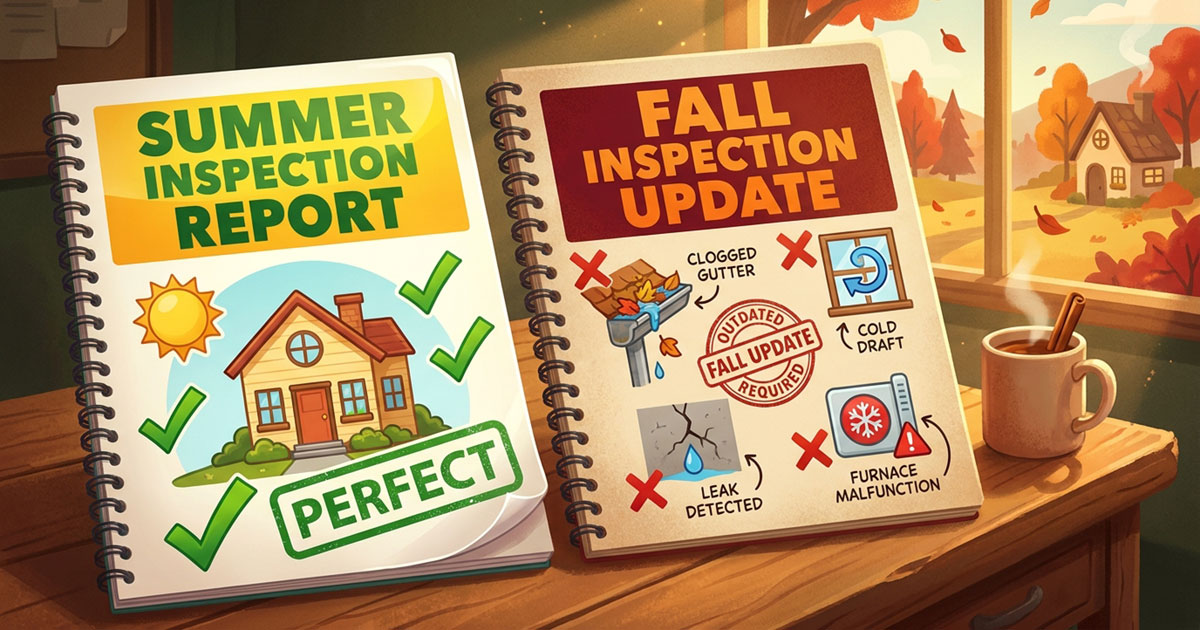
Relying on a summer home inspection report when purchasing property in the fall carries serious financial risks. Seasonal shifts expose hidden vulnerabilities like dormant heating systems, roof degradation, foundation hydrostatic pressure, and poor exterior drainage. Scheduling a fresh autumn evaluation provides accurate insight into critical structural and mechanical components, giving buyers essential protection and negotiation leverage before closing.
The Pitfall of Outdated Reports
When home shoppers tour properties during autumn, sellers frequently present an inspection report prepared during June, July, or August. While that document might look comprehensive and reassuring, seasonal transitions fundamentally alter how residential building materials and systems function. In summer, warm ambient air conceals drafty building envelopes, sunny dry spells mask persistent drainage flaws, and inspectors cannot stress-test central heating equipment under actual load. Trusting a months-old report assumes that a residential structure remains static, yet houses continuously interact with shifting environmental patterns. Over several months of summer heat and subsequent seasonal cooling, soil moisture levels fluctuate, UV radiation wears down roofing materials, and debris accumulates in drainage channels. Accepting an outdated evaluation leaves purchasers unaware of recent structural wear and environmental vulnerabilities that only surface once temperatures drop and rainfalls intensify.
Heating System Realities
The most immediate danger of depending on warm-weather evaluations involves the heating, ventilation, and air conditioning infrastructure. During an August inspection, a technician cannot safely run a furnace or heat pump at full operational capacity without risking mechanical overheating or tripping safety limit switches. Consequently, those summer summaries merely verify that the unit receives power or produces an ignition spark, which falls drastically short of confirming reliable cold-weather heating performance. Once autumn arrives, firing the burner reveals cracked heat exchangers, malfunctioning blower motors, corroded burner orifices, and clogged exhaust flues that could release dangerous carbon monoxide into living quarters. A specialized autumn inspection evaluates baseline combustion efficiency, thermostat calibration, radiator balancing, and ductwork integrity under realistic heating conditions. Discovering that a major HVAC system needs a complete replacement during your first freezing November night transforms a turnkey purchase into an expensive emergency, whereas uncovering these mechanical deficiencies prior to closing allows you to request necessary repairs or financial adjustments from the seller.
Moisture, Grading, and Drainage
Prolonged summer heat dries out topsoil, creating an illusion of dry crawlspaces, solid basements, and flawless exterior grading. However, autumn storms quickly expose how a property actually handles bulk water intrusion. Roof shingles that appeared secure in July can lift under autumnal winds, allowing rain to penetrate underlayment and saturate attic insulation. Furthermore, gutters clogged with seasonal leaf litter often overflow, dumping hundreds of gallons of water directly beside foundation walls rather than channeling it through downspouts away from the perimeter. If the soil surrounding the foundation lacks proper positive grading, hydrostatic pressure forces moisture through hairline masonry cracks, resulting in sudden basement flooding, damp framing, and active mold growth. A summer inspector simply cannot evaluate drainage pathways during dry weeks because they cannot observe how rainwater pools against exterior walls or subterranean footings. Arranging a fall inspection ensures that gutters, fascia boards, flashing seals, and sump pump discharges are thoroughly tested against genuine seasonal precipitation.
Insulation and Envelope Integrity
As outdoor temperatures cool, thermal deficiencies along the building envelope become significantly more apparent and measurable. Summer reports rarely capture missing attic insulation, unsealed crawlspace vents, degraded door sweeps, or failed double-pane window seals because the temperature differential between interior and exterior spaces is too narrow for standard diagnostic tools. When cool outdoor air clashes with heated indoor spaces in the fall, certified inspectors can deploy thermal imaging cameras to identify severe thermal bridges, air infiltration paths, and damp wall cavities with remarkable precision. Unaddressed envelope failures not only inflate monthly heating bills, but they also foster condensation pockets behind drywall, inviting rot and wood-destroying fungi. Detecting inadequate weatherization before completing your transaction ensures you do not inherit uninsulated exterior cantilevers, drafty attic hatches, or deteriorating caulking around window frames that could drastically compromise indoor comfort and energy efficiency throughout the upcoming winter months.
Negotiation and Repair Credits
Beyond physical safety and structural preservation, commissioning an up-to-date autumn inspection delivers significant strategic leverage during contract renegotiations. Fall real estate transactions operate under distinct dynamics compared to the spring buying frenzy, with sellers often motivated to finalize deals before holiday disruptions and inventory freezes. If your newly commissioned autumn inspection uncovers an aging furnace, overflowing gutter networks, or compromised roof flashing, you hold verified, current documentation of immediate repair needs. Rather than accepting vague assurances from obsolete summer disclosures, you can leverage tangible inspection findings to request seller credits toward closing costs or demand repair escrows for professional contractor remediation. Lenders and title companies also prefer current documentation when evaluating property condition standards and repair agreements. Walking into closing negotiations armed with real-time diagnostic evidence ensures that you avoid footing the bill for deferred maintenance that accumulated while the home sat on the market over the summer.
Securing Your Investment
Purchasing a home represents one of the largest capital commitments you will ever make, meaning that cutting corners on physical due diligence presents an unacceptable financial gamble. Relying on an obsolete summer inspection report creates a false sense of security that blinds buyers to the acute stresses that autumn weather exerts on roofing, heating units, drainage slopes, and building envelopes. A fresh, comprehensive autumn inspection serves as your essential safety buffer, transforming seasonal weather changes from a hidden liability into a diagnostic advantage. By demanding an updated physical examination conducted in the appropriate seasonal conditions, you uncover latent defects, protect your household from hazardous mechanical malfunctions, and preserve your financial leverage at the closing table. Investing in a timely fall evaluation ensures that you step across the threshold of your new property with complete confidence, knowing that your home is fully prepared to withstand the harsh demands of the coming winter.

John Doe
State of Nebraska
100 N 1st St, Lincoln, NE 68508
Email: service.myre@gmail.com
Phone: (555) 555-55-55
I take the time to listen carefully to understand my client’s needs, wants and concerns. I will be ready to take quick action when required and spend more time with those who aren’t quite sure which direction to take. My genuine concern for my client’s best interests and happiness ensures the job is done!